

Category: Supporting You

Here’s where we’ll post useful tips and actionable advice families can actually use.

  • Autumn Crafts Using Leaves, Conkers and Pinecones

    Autumn is one of the best times of year for getting creative. The trees are changing colour, conkers are dropping, pinecones are scattered across the ground and there are plenty of natural materials waiting to be turned into something fun.

    Better still, autumn crafts do not need to involve buying lots of expensive supplies. A walk around your local park or woodland can double up as a treasure hunt for your next craft session.

    Whether you are looking for something to keep younger children occupied, an activity for older children or simply an excuse to get creative together as a family, here are some easy autumn craft ideas using things you can find outdoors.

    Before You Start: Go On An Autumn Treasure Hunt

    Half the fun is collecting your materials.

    Grab a bag or basket and head outside to see what you can find. Look for fallen leaves in different colours and shapes, conkers, pinecones, acorns, twigs and other interesting natural materials.

    Encourage children to look closely at what they find. Which leaf is the biggest? How many different colours can they spot? Can they find a perfectly round conker or an unusually shaped twig?

    Remember to collect responsibly. Stick to items that have already fallen rather than pulling leaves, berries or branches from living plants, and only take a small amount so there is plenty left for wildlife.

    Once you get home, give everything a quick check for dirt, insects and anything particularly damp before bringing it to the craft table.

    Make Leaf People And Animals

    Different leaf shapes can quickly become ears, wings, tails, dresses, hair and all sorts of other features.

    Arrange your leaves on a piece of paper or card before gluing them down. Children could create a leaf person, butterfly, hedgehog, owl, fox or completely imaginary creature.

    Add details with pens, paint, googly eyes, scraps of paper or whatever else you already have in your craft supplies.

    There is no right or wrong way to do it. A wonky leaf fox with enormous ears is every bit as good as a carefully planned masterpiece!

    Try Leaf Rubbings

    Leaf rubbing is a classic autumn activity for a reason: it is incredibly simple and produces lovely results.

    Place a leaf underneath a sheet of paper with the veins facing upwards. Gently rub over the paper using the side of a crayon and watch the shape and details of the leaf gradually appear.

    Try using several different leaves and autumnal colours to create a whole picture. Older children could overlap different leaf shapes or experiment with patterns, while younger children can simply enjoy watching their hidden leaf appear.

    Print With Leaves

    Leaves can also become natural printing tools.

    Paint one side of a leaf, press it firmly onto paper and carefully peel it away. Different types of leaves will create different shapes and textures, so experiment with several varieties.

    You could use reds, oranges, yellows and browns for a traditional autumn picture, or forget the season entirely and use every colour you can find.

    Leaf printing can be used to make pictures, homemade cards, bookmarks or even wrapping paper.

    Turn Conkers Into Little Characters

    Conkers are brilliant for making tiny autumn characters.

    Paint them, add googly eyes or create little faces with permanent markers. Scraps of felt, wool, paper or pipe cleaners can become hats, hair, arms and accessories.

    You could make a whole family of conker people, tiny woodland creatures or monsters.

    For younger children, avoid activities that involve making holes in conkers and supervise carefully, as conkers and small craft materials can be a choking hazard.

    Make Pinecone Creatures

    Take a look at a pinecone and see what creature it reminds you of.

    With a little imagination, pinecones can become hedgehogs, owls, spiders, turkeys, fairies or strange woodland monsters.

    Use card or felt to make features such as wings, ears and feet, then add paint or googly eyes. You could even give each creature a name and create a woodland scene for them using leaves and twigs.

    Create An Autumn Collage

    If you have collected a little bit of everything, bring it together in one big autumn collage.

    Start with a sturdy piece of card and arrange leaves, small twigs and other lightweight natural materials into a picture or pattern. You could make a woodland scene, an autumn tree, an animal or an abstract design.

    Children can also add paint, crayons, stickers and other craft materials to make their collage completely their own.

    Make A Leaf Crown

    Who needs a plastic crown when autumn provides the decorations for free?

    Cut a strip of card long enough to fit comfortably around your child’s head and let them decorate it with fallen leaves. Look for different colours, sizes and shapes to make each crown unique.

    Once everything is securely attached and the glue has dried, fasten the ends of the card together.

    You now have an autumn king, queen, prince, princess or ruler of the leaves!

    Create An Autumn Wreath

    Wreaths are not just for Christmas.

    Cut a large ring from sturdy cardboard and decorate it with autumn leaves, pinecones, acorns, ribbons, paper shapes or anything else you have collected. Natural materials can be combined with craft supplies to add more colour and texture.

    Hang your finished wreath indoors as an autumn decoration, or make a new one later in the year to see how the colours and materials change with the seasons.

    Make A Nature Picture Frame

    Collect small leaves, tiny pinecones, twigs and other natural treasures and use them to decorate a simple cardboard picture frame.

    You could put a favourite family photo inside, display a picture your child has drawn or add a photograph from your autumn walk.

    It can also make a lovely homemade gift for grandparents and other family members.

    Build A Miniature Woodland

    For a craft activity that can turn into hours of imaginative play, use your autumn finds to build a tiny woodland world.

    A cardboard box or shallow tray can become your base. Add leaves for the forest floor, twigs for trees and fences, stones for paths and pinecones for trees or characters.

    Children can then add toy animals, homemade creatures or little figures and create their own stories.

    It does not need to look perfect. In fact, deciding what each random stick, leaf and conker could become is part of the fun.

    Autumn Crafts Can Be As Simple As You Like

    Crafting with children does not need to mean complicated instructions, expensive kits or a finished product that looks exactly like the picture you started with.

    Sometimes, a handful of leaves, a few conkers, some glue and plenty of imagination are all you need.

    Autumn crafting also gives families a reason to get outside, explore their surroundings and notice how the natural world changes throughout the year. The walk to collect your materials can be just as enjoyable as the crafting itself.

    At RUSH 2The DEN, we love giving children and adults opportunities to get creative, try something new and enjoy making things together. Keep an eye on our upcoming activities and events to see what we have planned throughout autumn and beyond.

    And next time you are out for a walk, take a closer look at what is lying underneath the trees. Your next craft project might already be waiting for you.

  • How to Keep Family Life Organised During Busy School Weeks

    Once the school year is properly underway, family life can start to feel very busy, very quickly. There are uniforms to wash, lunches to make, homework to remember, clubs to get to, forms to sign and seemingly endless messages from school.

    Add work, appointments, household jobs and actually spending time together into the mix, and keeping track of everything can become a challenge.

    Being organised doesn’t mean having a perfectly tidy home, colour-coded calendar or every minute of the week planned. It simply means finding a few systems that make everyday family life a little easier.

    Here are some practical ways to make busy school weeks feel more manageable.

    Keep One Family Calendar

    School dates on one app, appointments written on the fridge and club times stored somewhere in your emails are a recipe for forgetting something.

    Try to keep one main family calendar that everyone can refer to. This could be a paper calendar, whiteboard, diary or digital calendar – whatever works best for your household.

    Add things as soon as you find out about them, including:

    • School trips and special days
    • Parents’ evenings
    • After-school clubs
    • Youth clubs and activities
    • Medical and dental appointments
    • Birthdays and parties
    • Work commitments that affect childcare
    • Non-uniform and dress-up days
    • School holidays and inset days.

    If your children are old enough, encourage them to check the calendar too. It can help them learn to keep track of their own plans and responsibilities.

    Do A Quick Weekly Check-In

    You don’t need a lengthy family planning meeting every Sunday evening. Five or ten minutes looking at the week ahead can be enough.

    Check what everyone has coming up and identify anything that needs preparing in advance. Does someone need PE kit on Tuesday? Is there a school trip requiring a packed lunch? Does one child need picking up later because of a club?

    Spotting these things before the morning they’re happening can save a lot of last-minute rushing.

    Prepare What You Can The Night Before

    School mornings are rarely the best time to discover that someone’s PE kit is still in the washing machine.

    Encourage everyone to get as much ready as possible the night before. Uniforms can be laid out, bags packed, water bottles put somewhere obvious and anything needed for clubs placed by the door.

    Older children and teenagers can gradually take more responsibility for preparing their own things. A simple checklist can be useful while they’re getting used to doing it independently.

    You probably won’t eliminate every frantic morning, but even a little preparation can make getting everyone out of the door easier.

    Create A Home For School Stuff

    If you’re regularly hunting for school shoes, book bags, water bottles or letters, give frequently used items a designated home.

    It doesn’t need to be anything fancy. A basket for each child, a hook for every school bag or a tray for letters that need dealing with can make a big difference.

    When everyone knows where something belongs, there’s less chance of spending ten minutes searching the house for it when you’re already supposed to have left.

    Deal With School Messages In One Go

    Modern school life can involve a lot of communication. There might be emails, apps, newsletters, texts, online payment systems and paper letters arriving throughout the week.

    Rather than feeling as though you need to deal with every notification immediately, consider setting aside a regular time to check them.

    Add important dates straight to your calendar, complete forms that need returning and make a note of anything you need to buy or prepare.

    For anything that doesn’t need doing immediately, put it on your to-do list rather than relying on yourself to remember it later.

    Make Meals Easier, Not Perfect

    You don’t need an elaborate meal plan covering every meal and snack for the next seven days. Even knowing what you’re having for dinner for the next few nights can remove one daily decision.

    Keep a list of quick meals that everyone will eat and have a few easy options available for particularly hectic evenings.

    Batch cooking can also help if it works for your family. Making an extra portion of something you’re already cooking can give you an easy dinner for another day without requiring a whole afternoon of meal preparation.

    And sometimes, beans on toast, sandwiches or something from the freezer is absolutely fine.

    Have A School-Day Essentials Station

    There are certain things that children seem to need constantly: pens, pencils, glue sticks, hair bands, spare stationery, lunch bags and all the other little bits that disappear at exactly the wrong moment.

    Keeping frequently needed items together can make school mornings and homework time easier.

    You could also keep a small supply of things that tend to be requested at short notice, such as plain card, craft materials or spare stationery. It might save an emergency dash to the shops when someone remembers a project just before bedtime.

    Give Children Age-Appropriate Responsibilities

    Keeping family life organised shouldn’t automatically become one person’s job.

    Even younger children can help with simple tasks such as putting their shoes away, taking their lunchbox to the kitchen or putting dirty uniform in the washing basket.

    As children get older, they can take on more responsibility for remembering homework, packing bags, checking their timetable and getting equipment ready.

    They will probably forget sometimes – adults do too! – but giving children opportunities to practise these skills can help them become more independent.

    Build In A Little Spare Time

    It’s tempting to fill every available afternoon and weekend with activities, particularly when children have lots of interests. However, families need downtime too.

    Children and teenagers spend much of their week following timetables, concentrating at school and moving between different expectations. Having some unstructured time gives them an opportunity to rest, play, chat or simply do nothing for a while.

    The same applies to adults.

    You don’t have to make every free hour productive.

    Keep Routines Flexible

    Routines can make family life more predictable, but they don’t need to be rigid.

    Perhaps homework usually happens before dinner, bags are packed before bedtime or Sunday afternoon is when you check the week ahead. These little routines reduce the number of decisions everyone needs to make.

    But life happens. Someone gets ill, work runs late, an unexpected school request appears or everyone is simply exhausted.

    A routine should support your family, not become another thing to feel stressed about.

    Don’t Try To Remember Everything

    There is no prize for keeping the entire family’s schedule inside your head.

    Write things down. Set reminders. Stick a note on the front door. Use alarms on your phone. Put a checklist by the school bags. Ask your children to remind you about something.

    External reminders aren’t a sign that you’re disorganised – they’re a way of being organised.

    Make Space For Connection During Busy Weeks

    When everyone is rushing between school, work, clubs, homework and household jobs, it’s easy for family life to become focused entirely on what needs doing next.

    Connection doesn’t have to mean planning a big family activity. It could be chatting over dinner, walking home together, playing a quick game, watching something together or simply asking about each other’s day.

    Those small moments can be particularly valuable during busy weeks.

    Find Community Activities That Work For Your Family

    Having regular activities outside school can give children and young people something to look forward to, while providing opportunities to socialise, try new things and spend time with people outside their usual school environment.

    At RUSH 2The DEN, our activities are designed to give local children, young people and families opportunities to connect, play, create and be part of their community.

    You don’t need to fill every gap in your calendar. The aim is to find activities that your family genuinely enjoys and that work alongside everything else you already have going on.

    Give Yourself Some Breathing Room

    Some weeks will run smoothly. Others will involve forgotten water bottles, missing shoes, unsigned forms and someone announcing at 8.30pm that they need something very specific for school tomorrow.

    That’s family life.

    Organisation is about making things easier where you can, not creating another standard you have to live up to. Pick a couple of ideas that could take some pressure off your week and start there.

    And when things don’t go according to plan? Reset and try again tomorrow.

    At RUSH 2The DEN, we know how busy family life can be. Our activities and community sessions give children, young people and adults opportunities to spend time together, meet others and enjoy something away from the everyday rush. Keep an eye on our website and social media to see what’s coming up.

  • Settling Back Into the School Routine

    The uniforms have been worn, the new shoes have already picked up a few scuffs, and the excitement (or nerves!) of the first day back at school has passed. Children and young people have now been back at school for a few weeks, and for many families, September is beginning to feel a little more normal again.

    But that doesn’t necessarily mean everyone has completely settled in.

    Getting back into the school routine after the long summer holidays can take time. Early mornings, full school days, homework, clubs and earlier bedtimes are a big adjustment after several weeks of having more freedom. Even children who were excited to return to school can find the change tiring.

    If your household is still finding its feet, you’re certainly not alone.

    Why It Can Take Time To Settle Back In

    Six weeks is a long time in a child’s world. During the summer holidays, routines often become much more relaxed. Bedtimes may get later, mornings slower and mealtimes less structured. There may also be fewer demands on children’s attention and concentration.

    Going back to school suddenly changes all of that.

    Children need to get up at a certain time, get dressed and ready, arrive at school on time, concentrate for several hours, navigate friendships and follow classroom expectations. Then they come home and may still have homework, activities or other responsibilities.

    That can be exhausting, particularly during the first few weeks.

    You might notice your child seems more tired, emotional, irritable or hungry than usual. Younger children may need more reassurance or become clingier at home, while older children and teenagers might want more time alone after school.

    Sometimes, home is simply where children feel safe enough to let out everything they have been holding together during the school day.

    Keep The Routine Predictable

    One of the simplest ways to make the transition easier is to keep things as predictable as possible.

    You don’t need a minute-by-minute family timetable. A few regular points throughout the day can be enough to help children know what to expect.

    Try to keep wake-up times, meals and bedtimes reasonably consistent during the school week. Preparing bags, uniforms and anything else needed for school the night before can also make mornings much less stressful.

    For younger children, talking through what will happen the next day can be helpful. Older children and teenagers may benefit from having more responsibility for their own routine, while still knowing that support is there when they need it.

    Make Space For Downtime

    After spending all day listening, learning, socialising and following instructions, children may need some time to decompress when they get home.

    That might mean having a snack and watching television, playing outside, doing something creative, listening to music, gaming or simply having some quiet time.

    There can be a temptation to immediately ask lots of questions about the school day, particularly if your child has recently started a new school or class. But not every child wants to talk as soon as they walk through the door.

    Giving them a little space first may mean they are much more willing to chat later.

    Don’t Fill Every Afternoon

    Once the school year gets going, the calendar can quickly start filling up again. Sports, clubs, homework, appointments and other activities can leave children with very little genuinely free time.

    Activities can be brilliant for helping children develop skills, build confidence and make friends, but downtime matters too.

    If your child seems particularly exhausted at the moment, consider whether they need a quieter evening or weekend. They don’t have to be productive every minute of the day.

    Sometimes an afternoon spent doing very little is exactly what they need.

    Remember That Sleep Matters

    Getting enough sleep can make a huge difference to how children cope with the school day.

    If bedtime drifted later during the summer holidays and hasn’t quite returned to normal yet, gradually bringing it forward can be easier than trying to make a dramatic change overnight.

    A predictable bedtime routine can help younger children wind down, while older children and teenagers may benefit from having a clear point when the day begins to slow down.

    And, although it isn’t always easy, reducing screens immediately before bed may make it easier to switch off and settle.

    Look Beyond “How Was School?”

    If you’ve ever asked “How was school?” only to receive “fine” as the entire answer, you’re definitely not the only parent or carer.

    More specific questions can make conversations easier.

    You could ask what made them laugh that day, who they spent break time with, what the best part of lunch was, what they found difficult or what they are looking forward to tomorrow.

    For teenagers in particular, conversations don’t always happen when adults plan them. They might suddenly start talking while you’re in the car, making dinner or doing something else together. Being available without forcing the conversation can make it easier for them to open up.

    Watch For Signs They’re Struggling

    Some tiredness and grumpiness can be expected while everyone readjusts, but keep an eye on changes that continue or seem to be getting worse.

    A child who regularly says they don’t want to go to school, becomes very distressed before school, stops enjoying things they normally like or seems particularly worried about friendships or lessons may need some extra support.

    Talking to them is a good starting point. Depending on what is happening, you may also want to speak to their teacher, form tutor or another appropriate member of school staff.

    Children don’t always have the words to explain exactly what is wrong, so changes in behaviour can sometimes tell us that they need help.

    Make Time For Fun And Connection

    The school routine isn’t only about getting everyone out of the door on time and remembering PE kits.

    Children and young people still need opportunities to play, relax, see friends and enjoy themselves outside school. Having something to look forward to can be especially valuable when the school week feels long.

    That’s one of the reasons community spaces and youth activities matter.

    At RUSH 2The DEN, we want children and young people to have somewhere they can spend time with others without the pressures of lessons, homework or grades. It’s a chance to have fun, try different activities, build friendships and simply enjoy being themselves.

    Give Yourselves Time

    By this point in September, it can feel as though everyone should have settled back into school life. In reality, there isn’t a deadline.

    Some children bounce straight back into the routine. Others need several weeks to adjust, particularly if they have started a new school, moved into a new class, experienced changes in their friendship group or are facing new academic expectations.

    And parents and carers are adjusting too. Getting everyone fed, dressed, organised and where they need to be every day is a routine in itself.

    So, if September still feels slightly chaotic in your household, that’s OK. Keep the basics consistent, make room for rest and connection, and give everyone a little more time to find their rhythm.

    The school year has only just begun.

  • Keeping Children Safe in the Heat: A Guide for RUSH 2The DEN Families

    It’s hot. Really hot.

    While sunny days can mean more opportunities to get outside, the temperatures we’re currently experiencing can also pose a risk to children and young people. Babies and children aged 5 and under are particularly vulnerable to hot weather, but older children and teenagers can also become dehydrated or develop heat exhaustion or heatstroke.

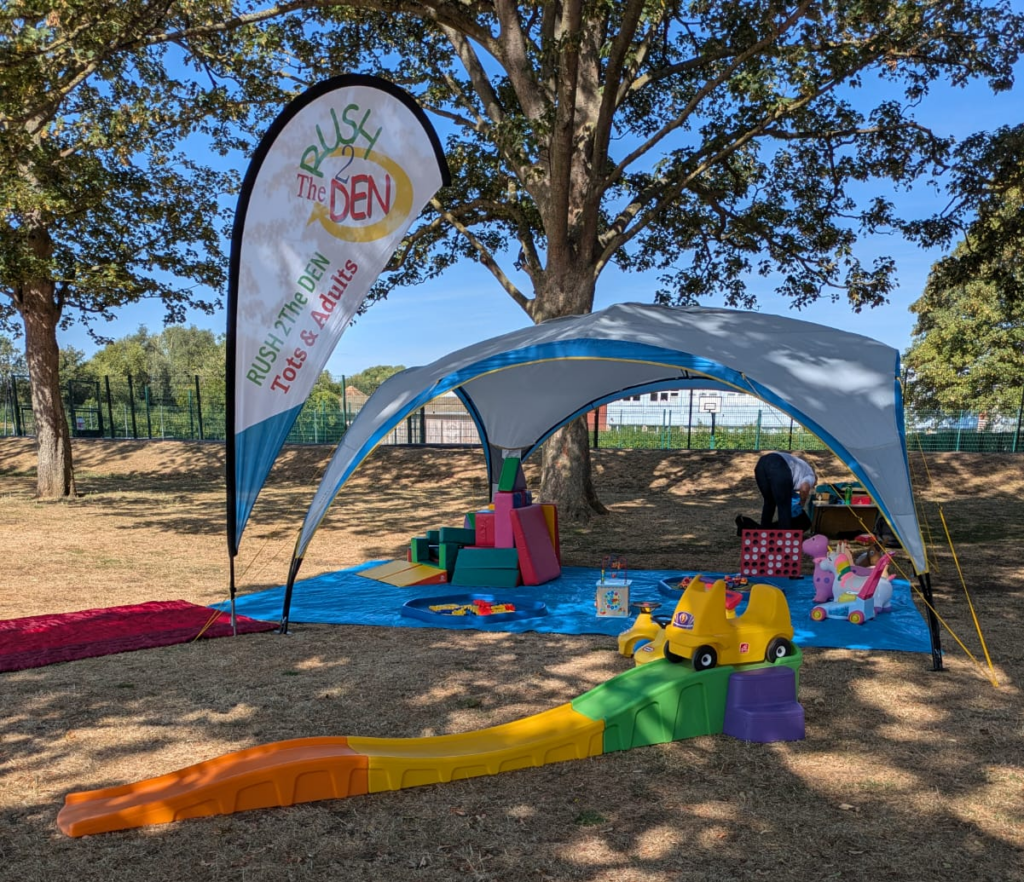
    With the RUSH 2The DEN building currently closed for refurbishment, many of our activities have moved outdoors. Our Tots sessions are taking place three times a week in Spencer Park and Hall Park, while our Youth Clubs are also enjoying outdoor activities.

    So, how can you help your child enjoy our outdoor sessions while staying safe in this awful heat?

    Keeping Babies and Under-5s Safe

    Children aged 5 and under are one of the groups most at risk during a heatwave. Younger children may also be less able to recognise or tell you that they’re becoming too hot or thirsty.

    If you’re joining us for one of our Tots sessions in the park, there are a few simple things you can do.

    Bring Plenty to Drink

    Make sure you bring drinks for both you and your little one. Children should be encouraged to drink regularly during hot weather rather than waiting until they say they are thirsty. If you’re breastfeeding, you can continue to breastfeed as usual.

    Keep offering drinks throughout the session, particularly if your child is running around and playing.

    Dress Them for the Weather

    Loose, lightweight and light-coloured clothing can help children stay cooler. A wide-brimmed sunhat can also help protect their face, neck and ears from the sun.

    Don’t Forget the Sunscreen

    For children who can use sunscreen, choose one with at least SPF 30 and a UVA rating of at least 4 stars. Apply it generously before coming out and reapply at least every two hours, as well as after activities that may remove it.

    Remember that sunscreen doesn’t make it safe to stay in direct sunlight indefinitely. Shade, clothing and limiting time in strong sun are important too.

    Make the Most of the Shade

    Try to keep little ones in the shade as much as possible, particularly during the hottest parts of the day. NHS advice recommends staying out of the sun where possible between 11am and 3pm.

    And remember: it’s absolutely fine if your child doesn’t want to run around as much as usual. Very hot days aren’t the time to encourage vigorous physical activity.

    Keep an Eye on Nappies

    If your child is still in nappies, fewer wet nappies or unusually dark urine can be a sign that they need more fluids.

    Keeping Older Children and Teenagers Safe

    Our Youth Clubs welcome young people up to the age of 17. They might be bigger, more independent and considerably harder to convince to wear a sunhat, but the heat can still affect them.

    Anyone can develop dehydration, heat exhaustion or heatstroke when temperatures get high enough. Spending time outdoors and being physically active can increase the risk.

    Water, Water and More Water

    Please encourage your young person to bring a refillable water bottle to outdoor Youth Club activities and actually drink from it!

    They should drink regularly throughout the session, particularly if they’re taking part in games or other physical activities.

    Encourage Sensible Clothing

    Lightweight, loose-fitting clothes will be much more comfortable than heavy or tight clothing in very hot weather.

    A hat and sunscreen are also important, even if they’re at the age where they think they’re far too cool for either.

    Take Breaks From Physical Activity

    Young people don’t need to spend the whole session sitting still, but very hot weather isn’t the time for intense exercise.

    UKHSA guidance recommends that children avoid vigorous physical activity on very hot days. Activities can be adapted, with regular breaks and plenty of opportunities to sit somewhere shaded and cool down.

    Don’t Cool Off in Open Water

    A river, lake or other stretch of open water can look very tempting when it’s boiling outside, particularly to teenagers.

    However, open water can carry serious risks. UKHSA has specifically warned young people and families about the dangers of entering open water to cool down during hot weather.

    Please encourage young people to stick to safer ways of cooling down.

    Know the Signs that a Child is Getting Too Hot

    Whether your child is 2 or 17, it’s important to recognise when the heat is becoming more than simply uncomfortable.

    Signs of heat exhaustion can include:

    • tiredness
    • dizziness
    • headache
    • feeling or being sick
    • excessive sweating
    • pale, clammy skin.

    If a child shows signs of heat exhaustion, move them somewhere cool, encourage them to drink cool water and start cooling their skin. If you’re concerned or their symptoms are getting worse, contact NHS 111.

    Heatstroke is a medical emergency.

    Warning signs can include confusion, poor co-ordination, seizures, loss of consciousness, a very high body temperature, hot red skin, a fast heartbeat or fast, shallow breathing. If you suspect heatstroke, call 999 and start cooling the child while you wait for help.

    Sometimes, Staying Home is the Right Choice

    We love seeing families at our sessions, but nobody should feel they have to attend when the weather is extreme.

    If your child is already unwell, seems particularly tired, isn’t drinking properly or simply isn’t coping well with the heat, staying somewhere cooler may be the better option.

    Children with some health conditions may also be more vulnerable during hot weather. If your child has a medical condition and you’re unsure how the heat could affect them, follow the advice you’ve been given by their healthcare team.

    Enjoy the Sunshine – Safely

    Having the building closed while refurbishment work takes place has meant we’ve had to get creative, and we’ve loved being able to continue bringing RUSH 2The DEN activities out into our local parks and community.

    But during exceptionally hot weather, safety will always come first.

    Please come prepared with water, sunscreen, suitable clothing and a hat, and keep an eye on how your child is coping with the temperature.

    And if plans need to change because conditions simply aren’t safe for outdoor activities, please keep an eye on RUSH 2The DEN’s usual channels for updates.

    We want everyone to have fun this summer without anyone getting poorly from the heat.